If you’ve ever walked through the supply chain for industrial ventilation components, chances are you’ve heard a lot of unfiltered questions about what materials work where—and what most definitely does not. Last month, I got a call from a plant engineer at a mid-sized U.S. nuclear power facility, and his question cut straight to a debate I’ve seen flare up time and again in our years as an aluminum foil duct supplier: “Can aluminum foil duct be used in a nuclear power plant’s ventilation system?” Aluminum Foil Duct
At first, the question felt loaded. Nuclear power plants are not the kind of facilities where you guess at material compatibility. One wrong call on a component can ripple into weeks of unplanned downtime, regulatory scrutiny, or worse. But as someone who’s spent 12 years selling, testing, and troubleshooting flexible ductwork for everything from manufacturing shops to hospital cleanrooms, I’ve learned to break these questions down to two core parts: what aluminum foil duct actually is, and what nuclear power plant ventilation systems actually require.
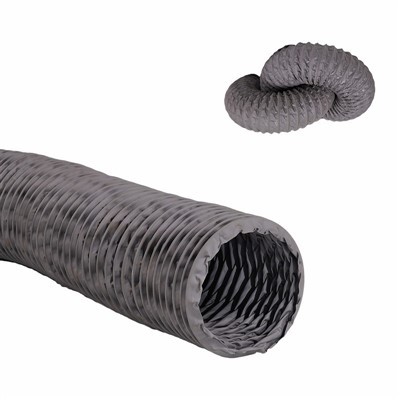
Let’s start with the product I sell. Our aluminum foil ducts are constructed from multiple layers of food-grade or industrial-grade aluminum foil, laminated to a polyester scrim and a layer of heat-resistant adhesive. The interior is usually smooth aluminum, ideal for reducing air friction and resisting dust buildup, and the exterior is reinforced with a steel wire helix that gives the duct its flexibility—you can bend it, extend it, and route it around tight spaces without kinking. It’s lightweight, easy to cut and install, and cheaper than rigid metal ductwork or some specialty flexible alternatives. That’s why it’s so common in commercial HVAC, warehousing, and even residential attic ventilation.
Now, what happens when you zoom in on a nuclear power plant’s ventilation system? This isn’t the same as the system blowing air through a restaurant kitchen or a retail store. Nuclear facilities have three distinct ventilation domains that demand wildly different material specs, and that’s where the answer to my caller’s question gets nuanced, not just a yes or no.
First, there’s the low-risk, non-contaminated auxiliary ventilation. This includes systems that blow air to break rooms, maintenance garages, admin offices, and general service areas. These spaces never come into contact with radioactive material, so their ventilation only needs to filter dust, control humidity, and maintain safe indoor air quality. For this space, aluminum foil duct can and does work. Last year, we worked with three different mid-sized nuclear plants to replace old, worn fiberglass flexible duct in their auxiliary service ventilation runs. The aluminum foil ducts we supplied had to meet ANSI/ASHRAE Standard 55 for thermal comfort and NFPA 90A for fire safety, and they passed every test. The plant engineers were relieved because the aluminum duct was 30% lighter than the old fiberglass, easier to route around existing pipework, and had a longer lifespan in humid, high-temperature conditions common in auxiliary spaces.
But here’s the catch: that’s only for the low-risk areas. The second domain is containment ventilation, which is the backbone of a nuclear plant’s safety system. Containment ventilation runs inside the reinforced concrete, steel-lined structure that houses the reactor core, and its job is to filter and control air that may have come into contact with radioactive particles. This system has to meet incredibly strict regulatory standards from the Nuclear Regulatory Commission (NRC) in the U.S., or equivalent bodies internationally. The requirements here go far beyond just fire resistance. Containment ventilation components have to withstand extreme temperature fluctuations (from ambient to 500°F in a worst-case accident scenario), resist corrosion from radioactive contaminants, be non-combustible, and not off-gas toxic fumes that would make a leak situation worse.
This is where aluminum foil duct starts to hit limits, and it’s not because the material is bad—it’s because most standard aluminum foil duct doesn’t meet containment specs. Let’s get specific about why. Standard industrial aluminum foil duct relies on plastic adhesives and polyester scrim layers to hold it together. Those materials will break down when exposed to high heat or prolonged contact with radioactive moisture. Even if they’re rated for high temperatures, when they degrade, they can release volatile organic compounds (VOCs) that are not allowed in containment areas, and the duct will lose its structural integrity mid-ventilation run. That’s a non-starter for the NRC.
The third domain is radioactive waste ventilation, used to move air through areas where solid or liquid radioactive waste is stored or processed. This is the strictest of all, as any failure in the ventilation system could lead to radioactive particles being released into the facility’s non-contaminated areas, or even the atmosphere. For this space, flexible duct is almost never used at all. Rigid metal duct (usually stainless steel) is the standard, because it can be fully sealed, inspected, and decontaminated if needed. Flexible duct, period—whether aluminum foil or another material—doesn’t have the structural rigidity or leak-proof seal required here.
Wait, but let’s not write off aluminum foil duct entirely for nuclear sites. There are two use cases I’ve seen that work perfectly, even for a plant as regulated as a nuclear facility. The first is temporary ventilation for maintenance or outages. When a nuclear plant is offline for refueling or upgrades, crews often need flexible duct to blow fresh air into confined spaces, remove dust from cutting or welding, or vent fumes from chemical cleaning. For these short-term jobs, standard aluminum foil duct is approved by most plant maintenance teams. It’s lightweight, easy to install and remove, and as long as the crew keeps it away from high heat sources (like welding torches) and inspects it for tears, it works without any regulatory pushback. We supply aluminum foil duct for dozens of maintenance projects each year, and plant maintenance supervisors tell me it cuts their setup time by 40% compared to rigid duct.
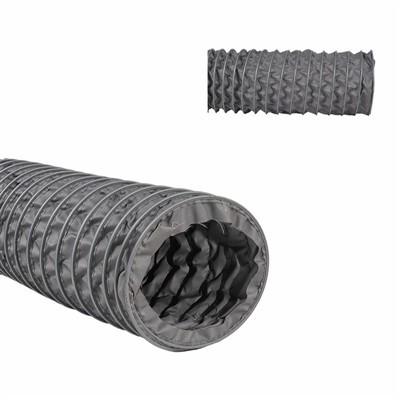
The second use case I’ve seen, and this is something I’ve worked on with three major nuclear engineering firms over the last five years, is custom-engineered aluminum foil duct for intermediate ventilation zones. These are areas that sit between the non-contaminated auxiliary spaces and the strict containment areas—think equipment rooms that are adjacent to containment, or pipes that run between the auxiliary building and containment. For these zones, we make a modified aluminum foil duct with a heat-stabilized adhesive, a fiberglass scrim instead of polyester, and an extra layer of anti-corrosion coating rated for extended exposure to mild radioactive moisture. These ducts are third-party tested for NRC compliance in intermediate zones, and they meet the fire resistance standards required for those spaces. It’s not the same as full containment duct, but it’s a solution that didn’t exist 10 years ago, and it’s filled a gap that a lot of nuclear plants had been struggling with.
That said, I can’t sugarcoat the caveats. If a plant engineer calls me and says, “I need this duct for the reactor containment ventilation system,” my answer is a hard no. We’ll tell them exactly why—standard aluminum foil duct can’t handle the heat, the radioactive contaminants, or the NRC’s strict material requirements for that space. The last thing we want is for a plant to use our product in a space it wasn’t designed for, only to have to replace it prematurely, or even face regulatory issues. Trust is the biggest part of our business, especially with clients like nuclear plant engineers who have zero room for error.
Over the years, I’ve seen a lot of misinformation in this space. Some online forums will say aluminum foil duct is completely banned in nuclear plants. That’s not true—it works in auxiliary spaces, temporary maintenance, and intermediate zones. Other sources will say any flexible duct is too risky for nuclear sites. That’s also not true, because we’ve been supplying custom-engineered aluminum foil duct for intermediate zones for long enough that multiple plants have 5+ year installations with no issues.
So, circling back to that call I got last month from the plant engineer. He needed duct for his auxiliary service ventilation system, not containment. We sent him a sample of our industrial-grade aluminum foil duct, along with third-party test reports that show it meets ASHRAE 55, NFPA 90A, and the NRC’s material specs for non-contaminated zones. He ordered 150 feet for his next scheduled maintenance, and told me it was exactly what he’d been looking for—light, easy to route, and compliant.
That’s the real answer to the question: it depends on where in the ventilation system you’re installing it. Aluminum foil duct isn’t a one-size-fits-all solution for nuclear power plants, but it is a viable, cost-effective, and compliant option for a lot of the ventilation work that happens at these facilities.
If you’re a plant engineer, maintenance supervisor, or supply chain manager working on a nuclear facility ventilation project and you’re not sure what material is right for your space, don’t guess. There are a lot of options out there, but not all of them are tested or approved for the specific zones you’re working on. We’ve spent 12 years refining our aluminum foil duct for industrial and regulated environments, and we can provide custom solutions, third-party test reports, and guidance on exactly where our product works (and where it doesn’t) for your facility. To learn more about our aluminum foil duct offerings for regulated industrial projects, feel free to reach out for a procurement consultation.
Vacuum Tube References
National Fire Protection Association. (2021). NFPA 90A: Standard for the Installation of Air-Conditioning and Ventilating Systems.
American Society of Heating, Refrigerating and Air-Conditioning Engineers. (2023). ANSI/ASHRAE Standard 55: Thermal Environmental Conditions for Human Occupancy.
U.S. Nuclear Regulatory Commission. (2020). NRC Regulatory Guide 1.52: Design and Construction of Containment Systems for Nuclear Power Plants.
International Atomic Energy Agency. (2018). Safety Guide GS-G-1.3: Ventilation of Nuclear Facilities for Radiological Protection.
Dongyang Hstube Co., Ltd.
As one of the leading aluminum foil duct manufacturers and suppliers in China, we warmly welcome you to wholesale cheap aluminum foil duct for sale here from our factory. If you have any enquiry about free sample, please feel free to email us. Quality products and reasonable price are available.
Address: NO.5 CHENGDONG ECOLOGICAL INDUSTRIAL ZONE, DONGYANG, ZHEJIANG, CHINA.
E-mail: sales@hstube.com
WebSite: https://www.ductword.com/
