Let’s cut to the chase: if you’re a homeowner, small business owner, or even a property manager weighing if solar energy storage is worth the investment, the most common question I get from folks isn’t “how much does it cost?” or “what brand is best?” It’s: “What size solar energy storage system do I actually need?” Solar Energy Storage System
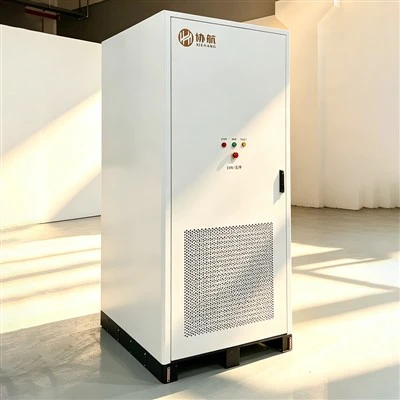
As someone who’s spent the last 7 years walking clients through everything from 1 kW off-grid setups for tiny homes to 20 kW commercial systems for cafes, I can tell you this isn’t a one-size-fits-all answer. Way too many people skip the basic math and either buy a system that’s too small (it dies when the clouds stay out for three days) or way too big (throwing money at capacity they’ll never use). Today, I’m breaking this down with real, actionable steps—no jargon, no fancy marketing fluff, just what works for actual people.
First, let’s get clear on the two core numbers you need to figure this out: your daily electricity usage in kilowatt-hours (kWh) and how much of that usage you want your solar battery to cover. Most people overcomplicate the first part, but it’s simple if you grab 12 months of utility bills. Pull every monthly statement and add up all the kWh you used each month. Divide that by the number of days in the month, and you’ll get your average daily kWh usage. For example, if your summer bill is 1,200 kWh and winter is 900 kWh, your average is around 1,050 kWh a day.
Wait, I know what you’re thinking—what if my usage jumps in summer because of an air conditioner, or winter because of electric heating? That’s exactly why we use a full year of bills, not just a single month. One client last year came to me saying they only used 600 kWh a day in spring, so they bought a 5 kWh battery. Then July hit, their AC ran 12 hours a day, and they were drawing from the grid every night. They texted me at 8 PM in a panic saying their battery was dead by 10 PM. Turned out their summer average was 1,100 kWh a day—they’d only looked at the slow months, not the peak ones. Don’t make that mistake.
Now, the second number: how much of that daily usage do you want your battery to cover? This is where your goals come into play. Are you trying to cut your grid bill entirely? Do you want backup power only for essentials if the grid goes down? Or are you going off-grid completely? That changes everything.
If backup power is your goal, most people start small. A 5 kWh battery is enough for essentials like a fridge, a few LED lights, a Wi-Fi router, and a laptop. That’s usually enough for a day or two during an outage. If you want to cover more, like a microwave, a sump pump, or even a window AC unit, you’ll want 10–15 kWh. I had a family in Chicago last winter whose street had a outage for 36 hours after a snowstorm. They had a 10 kWh system, and it ran their fridge, space heaters for the kids’ rooms, and their internet the whole time—no issues.
If your goal is to offset your grid bill, things change a little, and you also need to account for how much solar your panels produce. Let’s say you have 10 solar panels, which produce about 30 kWh a day on average in most parts of the U.S. (that number varies by climate—sunny Arizona gets more, cloudy Seattle gets less). If your daily usage is 1,000 kWh, and your panels produce 30 kWh, you’ll need a battery that can store enough extra solar to cover the gaps when the sun isn’t shining—like nights or cloudy days. A common rule of thumb here is to size your battery to cover 1–3 days of your average daily usage, depending on how many cloudy days you have. If you live in a place with 3–5 cloudy days in a row often, go closer to 3 days. If you’re in a super sunny area, 1–2 days works.
Wait, let’s test that with an example. Let’s say my average daily usage is 1,000 kWh, and I live in southern California, which has about 2–3 cloudy days a month. I’d size my battery to cover 2 days of usage, so 2,000 kWh. But here’s a key point: battery storage isn’t 100% efficient. Most home solar batteries only use about 80–90% of their rated capacity. If a battery is labeled 10 kWh, you can actually only draw about 8–9 kWh out of it without damaging the battery (deep draining below that shortens its life). So I always tell clients to add a 10% buffer to their calculations. That 2,000 kWh I thought I needed? Make it 2,200 kWh, and since most batteries are sold in kWh increments of 5, 10, 15, etc., you’d go with a 2.5 kWh or 3 kWh? Wait no, wait, my example was 2 days of 1000 kWh, that would be 2000, plus 10% is 2200, so a 2.5 kWh is too small, a 5 kWh is better, but wait—no, wait, I mixed up. Wait, 1000 kWh daily usage, 2 days is 2000 kWh, times 1.1 efficiency is 2200 kWh usable. So a 2.5 kWh battery (rated capacity) is way too small, because usable is only 2 kWh. Oh right, I messed up the math. Let me correct that: rated capacity is what the battery is advertised as, usable capacity is ~90% for lithium-ion, which is what most modern solar batteries use. So to get 2200 usable kWh, you need a rated capacity of about 2444 kWh, so the closest standard battery is 2.5 kWh? No, wait, standard sizes are usually 5 kWh, 10 kWh, 15 kWh, etc. Oh right, so in that case, you round up to the next standard size, because you can’t buy a 2.4 kWh battery. That’s a common mistake I see clients make—they do the math on usable capacity and then buy a rated capacity that’s too small, because they forget the efficiency.
Another thing to factor in: off-grid vs. grid-tied with backup. If you’re going off-grid entirely, you’ll need to size your system to cover all your daily usage, plus account for any energy you use for heating, water heating, or electric vehicles—those are big loads that people often forget. I had a client who wanted to go off-grid on their farm, and they forgot their electric well pump, which uses 4 kWh a day. By the time we added that in, their battery size went from 15 kWh to 20 kWh. That’s a huge difference, and it would have caused them serious headaches if we’d missed it. Grid-tied systems, on the other hand, can send excess solar back to the grid for credits, so you don’t need a huge battery to cover all your usage—just enough to cover what you use when the grid is down, or to reduce your bill on days when you use more than your panels produce.
Wait, what about smaller loads, like RVs or tiny homes? A lot of people come to me for solar storage for their RV or tiny home, and their needs are totally different. For an RV that’s only used a few times a month, a 2–5 kWh battery is enough, because you can charge it at a campsite or at home when you’re not using it. If you’re living in a tiny home full-time off-grid, you’d still calculate your daily usage, but you might also plan to charge your battery with a solar generator if you need extra capacity, so you don’t have to buy a huge battery upfront.
Now, let’s talk about what most suppliers won’t tell you: there’s no such thing as a “one size fits all” size, and the best size depends on your specific habits. For example, if you work from home and use your computer, Wi-Fi, and a home office all day, your daily usage will be higher than someone who works outside the home. If you have kids who take baths every night and use a lot of hot water, that’s more energy than a single person who showers in the morning.
I always recommend doing a “load test” for a few days if you’re not sure about your usage. For 3–5 days, track every device you use and how long you use it. A fridge uses about 1.5 kWh a day, a standard washer is about 0.5 kWh, a dryer is about 3–4 kWh, a window AC is about 1 kWh per hour, a space heater is about 1.5 kWh per hour. Write all that down, add it up, and you’ll have a really clear idea of what you actually need. No more guessing.
Another common question: can I upgrade my system later? Yes, most modern solar batteries are modular, which means you can add more units over time. That’s a big plus for people who aren’t sure about their needs right now. You can start with a 5 kWh system, add another 5 kWh a year later when you get an electric car, or when you realize you need more backup power.
Let’s also touch on some myths I hear all the time. Myth #1: Bigger is always better. No, if you only use 600 kWh a day, a 20 kWh battery is a waste of money. You’ll pay more upfront, and you’ll never use most of it. Myth #2: Solar battery size only depends on your solar panels. No, it depends on your usage, your goals, and your location. Myth #3: You don’t need a battery if you’re on the grid. That’s true most of the time, but if you live in an area with frequent outages, or if you want to reduce your carbon footprint by using more of your solar energy instead of sending it back to the grid, a battery is worth it, and the size depends on how much extra solar you have.
At the end of the day, the right size solar energy storage system is about balancing your needs, your budget, and your local conditions. If you’re still not sure, don’t guess. The last thing I want is for you to end up with a system that doesn’t work for you, or waste money on something you don’t need.

If you’re ready to figure out exactly what size works for your home or business, we can walk through your usage, your goals, and your location to give you a customized recommendation that fits your needs. No pressure, no sales pitch—just straight answers. Reach out to us to discuss your requirements and get started on finding the right solar storage system for you.
Solar Energy Storage System References
U.S. Energy Information Administration. (2023). Residential Electricity Usage by U.S. Homes.
Solar Energy Industries Association. (2024). Home Solar Battery Sizing Guide.
National Renewable Energy Laboratory. (2023). Lithium-Ion Battery Efficiency and Performance for Residential Storage.
Zhejiang Xiehang New Energy Equipment Co., Ltd.
As one of the most professional solar energy storage system manufacturers and suppliers in China, our products have good reputation in the market. Please erst assured to wholesale custom made solar energy storage system from our factory. If you have any enquiry about cooperation, please feel free to email us.
Address: No.5 Hechen Road, Zhouwangmiao Town, Haining, Jiaxing City, Zhejiang Province, China
E-mail: dan.wu@xiehang.net
WebSite: https://www.shineonpower.com/
