If you’ve ever stood on a production floor—whether watching automotive parts roll through a weld station, pharmaceutical vials glide into packaging, or electronics circuit boards zip through an assembly line—what you might not notice at first glance is the quiet work happening off to the sides. That work is done by auxiliary equipment, and it’s the unsung backbone of modern production automation. I’ve spent the last eight years as an auxiliary equipment supplier, walking production floors with plant managers who tell me they can’t reach their 24/7 output targets without these “extra” pieces of kit. Automation only works at full efficiency when every supporting component is synced to the line, so today I want to break down exactly how auxiliary equipment turns a basic automated line into a high-output, reliable, and adaptable operation. Auxiliary Equipment
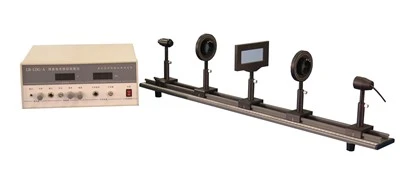
Let’s start with a simple truth most new automation adopters overlook: a main assembly robot or conveyor system doesn’t exist in a vacuum. It relies on auxiliary equipment to handle all the little, non-core tasks that would stall a line if done manually. Think of it like a professional athlete: the star quarterback or forward needs a coach, a nutritionist, a playbook, and medical support to perform at their best. The main production equipment is that star, and auxiliary equipment is the entire team keeping the game on track.
Take material handling, for example. Any automated line needs raw materials to feed into it, but getting those materials from storage to the line at exactly the right time, quantity, and condition is far harder than it sounds. If you’re running a line that makes plastic packaging, the main injection molding machines are only as good as the auxiliary equipment that dries, conveys, and blends the plastic resin before it enters the machine. I once worked with a small packaging plant that installed a brand-new automated injection molding line in 2020, but they skipped the upgraded material drying auxiliary equipment they’d been using manually. Their resin had residual moisture that caused bubbles in the packaging, leading to a 12% defect rate and 6 hours of unplanned downtime every week. When they switched to a closed-loop desiccant dryer (our standard auxiliary offering) that syncs with the molding line’s PLC—programmable logic controller—adjusting drying temperature and time based on the resin type and line speed, their defect rate dropped to under 2% and that weekly downtime vanished. That’s the impact of auxiliary equipment: solving a seemingly small gap that derailed their entire automation investment.
Another critical area is process conditioning. Even the most precise automated robots can’t handle parts that are too hot, too dirty, or out of spec when they arrive. Auxiliary equipment here is the quality control and preparation layer that keeps the line flowing without interruptions. For metal stamping lines, part cooling auxiliary units are non-negotiable; a stamped metal part is 800 degrees Fahrenheit when it leaves the die, and if a robot tries to handle it immediately, it will burn its grippers, damage the part, and stop the line for hours. A liquid cooling chiller or forced-air quench station syncs with the stamping press, measuring part temperature every 0.5 seconds and adjusting cool-down time so parts hit exactly 120 degrees (the safe threshold for robotic handling) every time. For pharmaceutical lines, auxiliary equipment like high-precision syringe washer-disinfectors remove residual chemicals and particulate matter from glass vials before filling, ensuring the final product meets FDA purity standards—something the automated filling robot could never do on its own. These tasks aren’t “extra”; they’re the reason automated lines can run for 20+ hours a day without producing waste or endangering product safety.
Then there’s the often-overlooked category of line coordination and safety, which is where auxiliary equipment turns a loose collection of machines into a unified, automated system. PLCs are the brain of the line, but auxiliary equipment provides the sensory and safety data that the brain uses to make decisions. Take automated quality inspection: a vision system (a type of auxiliary equipment) mounted above a conveyor scans every part for dents, misaligned holes, or incorrect labeling in milliseconds. If it finds a defect, it sends a signal to the line’s PLC, which stops the part at a reject station—another auxiliary component—without the line having to shut down entirely. Without that vision system and reject unit, the line would either waste hours stopping and starting to check parts, or ship defective goods. Even safety auxiliary equipment plays a huge role here. Light curtains, safety scanners, and emergency stop (E-stop) modules aren’t just afterthoughts; they sync with the entire line’s control system. If a worker steps into a restricted zone, the light curtain sends a signal to every robot, conveyor, and press to shut down in under 100 milliseconds, preventing injury and avoiding costly OSHA fines. I’ve seen plants try to cut corners here by using generic safety gear that doesn’t integrate with their automation system, only to face $150,000 OSHA penalties and a 3-day line shutdown to reconfigure sync. Good auxiliary safety equipment isn’t just compliant—it’s designed to work with the automation line’s existing software from day one.
Adaptability is another key benefit auxiliary equipment brings to automated lines, especially as consumer demand shifts toward shorter production runs and more customized products. Ten years ago, many automated lines were built for one single product, running 24/7 with no need to change over. Today, customers want lines that can switch from making a 12oz soda can to a 16oz can in 10 minutes, or from a size small to size large packaging in half an hour. Auxiliary equipment makes that flexibility possible. For example, our auxiliary mold temperature controllers can switch between different mold sizes with the press of a button, adjusting heating and cooling parameters automatically so you don’t have to manually calibrate the machine every time. For electronics assembly lines, auxiliary feeder systems that hold and distribute components can be reconfigured in minutes to switch from motherboard for laptop A to motherboard for laptop B, without stopping the entire assembly line. A client of mine in the wearable tech space used to run a manual line that took 2 hours to switch between product models; after integrating auxiliary feeders, label applicators, and component sorters that sync with their line’s ERP (enterprise resource planning) system, they cut changeover time to 12 minutes and increased their line’s output by 28% in the first year. That adaptability isn’t a nice-to-have—it’s how manufacturers stay competitive in a market where product lifecycles are shrinking by 20% every year, according to a 2023 report from the Manufacturing Extension Partnership.
I also can’t talk about auxiliary equipment’s role in automation without mentioning efficiency and cost savings, which is what drives most plant managers to invest in this gear. Automation is often sold as a way to cut labor costs, but the real savings come from reducing waste, energy use, and unplanned downtime. Let’s go back to the material drying example I mentioned earlier: the plant that had the 12% defect rate was wasting $18,000 a month in defective packaging material. When they upgraded to our sync’d dryer, they eliminated that waste entirely. But the auxiliary dryer also uses 30% less energy than their old manual dryer, because it only runs at full power when the line is running, and adjusts energy use based on resin conditions. Over a year, that’s another $21,000 in energy savings. For mid-sized plants, these numbers add up fast: a 2022 study from the Association for Packaging and Processing Technologies found that auxiliary equipment upgrades can reduce total line operating costs by 15-25% within the first 18 months, with a payback period of less than a year. That’s a better return on investment than many core automation upgrades, because auxiliary equipment is often more targeted to the specific pain points of a line.
Of course, none of this works if auxiliary equipment isn’t properly integrated with the main automation line. I’ve seen too many plants buy a fancy robotic arm and then piece together auxiliary equipment from different vendors, only to find that the PLC of the robot can’t communicate with the PLC of the material feeder or quality inspection system. That leads to downtime, misaligned production, and wasted money. That’s why our team specializes in not just selling auxiliary equipment, but working with plants during the design phase of their automation line to ensure every component is synced from the start. We test the communication protocols—whether that’s Modbus, EtherNet/IP, or Profinet—before installation, so when the line is turned on, every part is talking to the others in real time. For example, if a quality inspection vision system finds a batch of defective parts, it signals the auxiliary powder coating unit to pause applying paint, so paint isn’t wasted on bad parts; it also sends a signal to the material conveying system to hold the next batch of parts until the defect is fixed. That level of coordination is only possible when auxiliary equipment is designed to integrate, not just operate on its own.
Looking ahead, the role of auxiliary equipment in automation is only going to grow as lines become smarter with Industry 4.0. Today, auxiliary equipment can already collect data: a smart chiller can track its energy use, temperature, and maintenance needs, sending alerts to plant managers when a filter needs changing or a part is wearing out. Tomorrow, that data will feed into predictive maintenance systems, so a plant can fix a chiller’s motor before it fails and stops the line, rather than reacting to unplanned downtime. We’re already testing auxiliary equipment that uses IoT (internet of things) to connect to cloud-based monitoring platforms, so a plant manager in Michigan can check their auxiliary equipment’s performance on their phone while on a business trip in Texas. That level of visibility is going to make automated lines even more efficient and reliable.
For anyone looking to automate their production line, the biggest mistake you can make is treating auxiliary equipment as an afterthought. It’s not the star of the show, but it’s the reason the star can perform. Whether you’re launching a new automated line or upgrading an existing one, every component—from the small dryer that conditions raw material to the safety light curtain that keeps workers safe—needs to be aligned, integrated, and tailored to your specific product and production goals.
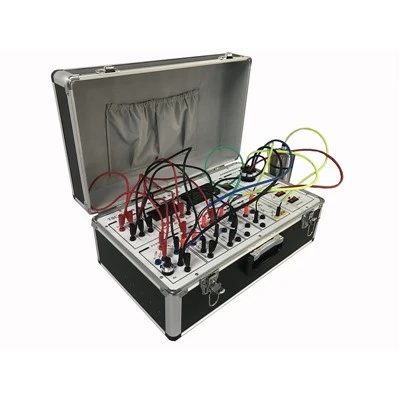
If you’re looking to make your automated line more efficient, reliable, and adaptable, our team has worked with hundreds of manufacturers across industries to design, supply, and integrate auxiliary equipment that fits their exact needs. We don’t sell one-size-fits-all gear; we take the time to understand your line’s current pain points, your production targets, and your long-term goals, so our auxiliary equipment works for your business, not against it. To discuss how auxiliary equipment can support your production automation, reach out to our team for a consultation.
Optical Instruments References
Association for Packaging and Processing Technologies. (2022). Auxiliary Equipment Impact on Line Efficiency and Cost Savings. Manufacturing Extension Partnership. (2023). The State of U.S. Production Automation, 2023. International Society of Automation. (2021). Integrating Auxiliary Equipment with Industrial Automation PLCs.
Nanjing Longbow Scientific&Educational Instrument Co., Ltd.
As one of the most professional auxiliary equipment manufacturers and suppliers in China, we’re featured by quality products and good service. Please rest assured to buy customized auxiliary equipment from our factory. If you have any enquiry about pricelist, please feel free to email us.
Address: Room D, 22th floor, No.305, North Jiangdong Road, Nanjing,Jiangsu Province, China
E-mail: 79425380@qq.com
WebSite: https://www.lb-physics.com/
