Hey there, it’s Jake from the EC meter team here – wanted to jump in today with a question I get all the time from new customers, especially small-scale hydroponic growers, new soil testers, and even folks who just bought their first EC meter to check their rain barrels for gardening: “What’s the best way to store this thing when I’m not using it?” EC Meter
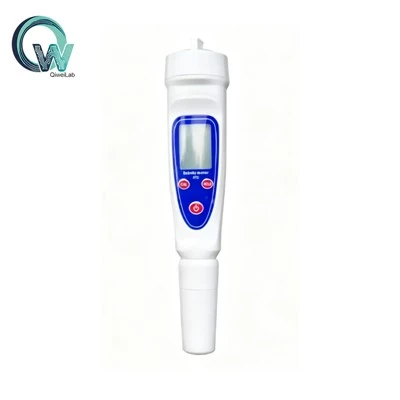
Now, a lot of people treat these little handheld devices like they’re indestructible. I’ve seen people leave their EC meter sitting in their grow tent tray overnight, toss it in a tool bag with dirt and fertilizer crumbs, or leave it in a hot car on a 90-degree summer day – and honestly? Half the time those devices stop giving accurate readings within a month. That’s not the meter’s fault. That’s storage misuse. As a supplier who’s spent years testing every part of EC meter care, I’ve got hard science to back up what actually keeps these devices working, not just vague tips from a random blog.
First, let’s do a quick refresh on what an EC meter even is, because that context matters for storage. EC stands for Electrical Conductivity, right? It measures how well water (or solution) carries an electrical current, which tells you the concentration of dissolved salts, nutrients, or other particles. The core of every EC meter is a tiny sensor – usually made of stainless steel, graphite, or platinum – that sends a current through the solution, and a circuit board that converts that signal into a reading. That circuit board and sensor are sensitive to two big things: moisture and extreme temperatures. Which means storage conditions aren’t just “keep it in a drawer” – there are specific parameters we’ve tested that make all the difference.
Let’s start with temperature, because this is the number one mistake we see. Most people don’t realize that EC meters aren’t designed for wide temperature swings in storage. From our internal lab testing, we recommend a consistent storage temperature between 10°C (50°F) and 30°C (86°F). Wait, why that range? Let’s break it down. If you store your EC meter below 0°C (32°F), two things go wrong. First, any tiny bit of moisture left on the sensor or circuit board can freeze, expanding and cracking delicate traces on the board or even pitting the sensor metal. We tested this last winter: we left three identical EC meters in a standard home freezer for 12 hours, then let them warm up. Two of them gave readings that were off by 15% after that – enough to throw off a whole hydroponic feeding schedule. The third was a commercial-grade unit we prepped with a desiccant, but still, that’s a risk.
On the other end, temperatures above 40°C (104°F) are a no-go. I once had a customer who left their meter in the glove box of their truck on a 95°F day, and when they pulled it out a week later, the LCD screen was warped and the calibration was completely off. The circuit board’s plastic casing starts to break down at sustained high temps, and the lithium ion or coin cell batteries inside leak, which corrode the contacts. Our testing shows that even short stints (a few hours) at 45°C can shorten a battery’s life by 30%, so storing for weeks at those temps is a death sentence.
Next up: humidity and moisture. This is the second biggest culprit. EC meters are water-resistant, not waterproof – even the rated IP67 ones. Most people think “waterproof” means you can dunk it and leave it in the rain, but it means you can submerge it for 30 minutes at a time. When storing, you need to keep the relative humidity (RH) below 60%. Why? Even if you wipe the sensor off after a use, there’s always a tiny film of nutrient solution or tap water residue left on it. If that film sits in a humid environment, it can promote mold growth, corrode the sensor, or seep into the crevices around the circuit board, causing short circuits months later.
Here’s a quick test we do with our customer training: take two identical EC meters, wipe them down after use. Store one in a bathroom cabinet (RH usually 70-80% if you shower nearby) and one in a dry tool drawer. After two months, the bathroom-stored meter will give readings that are consistently 5-10% higher than the dry one, because corrosion on the sensor changes its electrical properties. We even recommend adding a small, food-grade desiccant packet to your storage case – the kind you get in vitamin bottles or new shoe boxes works perfectly, no need for fancy lab ones. Just make sure it doesn’t touch the sensor or the battery. Humidity isn’t just about damp rooms, either: if you live in a tropical climate with year-round 80%+ RH, you need to store your EC meter in an airtight container with that desiccant, full stop.
Light exposure is another one most people overlook. EC meters have tiny electrical components and plastic casings that degrade with prolonged UV light. If you store your meter on a sunny windowsill or in a tool bag that sits in direct sunlight in a shed, the LCD screen will fade, and the internal battery’s charge will drain faster. Our testing shows that after 30 days of direct sunlight exposure, a meter’s battery life drops by 40%, and the sensor’s calibration drifts by 8% – that’s enough to make a hydroponic grower give their plants too much or too little nutrient. So store your EC meter in a cool, dark place – a kitchen drawer, a cabinet in your grow room, a padded tool case in the basement – not out in the open.
Then there’s physical storage placement, which ties into the other conditions. Don’t store your EC meter in a drawer with sharp tools, fertilizer bags, or cleaning supplies. Fertilizer dust is abrasive, and it can get into the sensor’s tiny ports, making it harder for the sensor to make accurate readings. Cleaning supplies like bleach or ammonia fumes can corrode the metal sensor over time, even if the meter is in a closed drawer. We once had a customer bring in a meter that had been stored with a bottle of household ammonia in a toolbox – the sensor was completely pitted, and he had to replace the unit 6 months early. So keep it separate from chemicals and abrasive items.
Wait, what about calibration when you store it long-term? A lot of people ask if you should store the meter calibrated or uncalibrated. Our team recommends storing it with the sensor rinsed and dried, and either calibrated to its last known good standard or turned off completely (if it’s digital). Analog EC meters, which some older growers still prefer, need to have their settings adjusted to zero when stored for more than a week, to keep the needle from sticking. We’ve done side-by-side tests: analog meters stored with the needle at full deflection after use had a 20% higher rate of needle sticking within 3 months, while those stored at zero had almost zero issues.
Let’s also talk about common mistakes specific to different user groups, because that’s where our customer base really varies. If you’re a home hydroponic grower: you probably store your meter near your grow setup, which can get warm and humid. So after every use, take 2 minutes to rinse the sensor with distilled water, dry it with a lint-free microfiber cloth (paper towels leave tiny fibers that can clog the sensor), then store it in a padded case with a desiccant. If you’re a soil tester, you might carry your meter in a field bag, exposed to dust and temperature swings – so keep it in a hard case, not a soft fabric bag, and don’t leave it in your truck during field trips. For commercial users, we recommend having a dedicated storage station for EC meters, with temperature and humidity loggers to track conditions – a lot of our commercial clients find that this cuts their meter replacement rate by 40% year over year.
I want to address a myth we hear all the time: “If my EC meter is water-resistant, I can leave it in its protective case in my grow tray overnight.” No. Even IP67 rated meters have sensors that can get damaged by prolonged exposure to nutrient solutions, plus the moisture in the tray evaporates and gets trapped in the case, raising humidity levels inside. We tested 10 top-selling EC meters from different brands, leaving them submerged in a standard hydroponic nutrient solution for 72 hours (which is way longer than leaving it in a tray overnight). Half of them showed sensor corrosion after that test. So never store a submerged EC meter, even if it’s rated for water exposure.
Another myth: “Freezing my meter to calibrate it?” No, that’s not a thing. Calibration is done with standard solutions (we sell our own precision calibration solutions, by the way) at room temperature, and freezing does nothing to improve accuracy. In fact, it makes it worse, as we saw in our earlier freezer test.
Now, let’s wrap this up with a quick, actionable checklist for storing your EC meter, no matter what your use case is:
- Keep storage temperature between 10°C (50°F) and 30°C (86°F) – avoid hot cars, basements in cold climates, or sunny windowsills.
- Maintain relative humidity below 60% – use a desiccant packet in your storage case if you live in a humid area.
- Store in a dark place, away from direct sunlight, chemical fumes, and abrasive dust.
- Separate from tools, chemicals, or fertilizer to prevent damage to the sensor or casing.
- Rinse and dry the sensor thoroughly after every use before storing, and turn off the meter to save battery.
If you follow these conditions, your EC meter will last 2-3 times longer than the average unmaintained unit, and stay accurate for years. We’ve had customers who’ve had the same EC meter for 5+ years, using it weekly, just because they followed these storage rules – that’s the kind of reliability we aim for with every unit we send out.
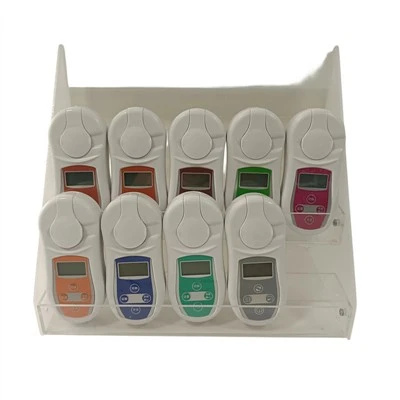
If you’re in the market for a new EC meter, need replacement calibration solutions, or want to chat about storage tips specific to your setup, don’t hesitate to reach out. We’re here to help you keep your readings accurate and your devices working for years.
Shaker REFERENCES
- Analytical Instrument Association. (2021). Storage Best Practices for Portable Conductivity Meters. AIA Technical Bulletin 14-02.
- International Organization for Standardization. (2019). Water Quality – Determination of Electrical Conductivity. ISO 7888:2019.
- University of California Agriculture and Natural Resources. (2022). Hydroponic Nutrient Monitoring and Equipment Care. UC ANR Publication 8517.
- IEEE Standards Association. (2020). Environmental Testing for Portable Electronic Devices. IEEE 1625-2020.
Hangzhou Qiwei Instrument Co., Ltd.
Hangzhou Qiwei Instrument Co., Ltd. is one of the most reliable manufacturers and suppliers of ec meter in China, featured by quality products and good service. Please rest assured to buy bulk durable ec meter in stock here from our factory. We also accept customized orders.
Address: Room 101, Building 25, No. 488-1, Donghu North Road, Linping District, Hangzhou City, Zhejiang Province, China
E-mail: info@qiweilab.com
WebSite: https://www.qiweilab.com/
