If you’ve ever walked into a municipal plumbing supply warehouse or chatted with a residential plumber about the materials they trust for water lines, odds are you’ve heard of PP-R pipes and fittings. As a long-time PP-R supplier—I’ve been on the ground, loading trucks, troubleshooting installer questions, and walking through test sites with city inspectors for the past 12 years—I get asked one question more than any other: “Are these actually safe for drinking water systems?” It’s a fair question, too. For decades, copper and galvanized steel were the go-to for potable water lines, and switching to a plastic material carries a lot of unspoken skepticism. Let’s cut through the noise, ground this in real-world data and hands-on experience, and break down exactly why PP-R (short for Polypropylene Random Copolymer) has become the workhorse for drinking water systems across 70+ countries, while addressing every valid concern that comes up. PP-R Pipes and Fittings
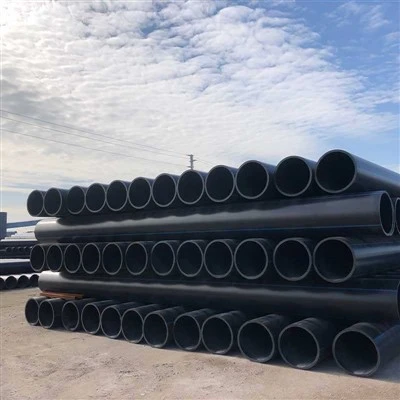
First, let’s demystify what PP-R actually is, because not all plastics are created equal. PP-R is a thermoplastic made by combining propylene monomers with a small amount of ethylene, arranged randomly along the polymer chain—this random structure is what sets it apart from other polypropylenes, like the rigid PP-H used for industrial chemical piping. The random arrangement gives PP-R two non-negotiable properties that matter for drinking water: it’s flexible enough to handle minor ground shifting (no need for extra expansion joints in most residential runs) and it’s chemically stable, even when exposed to hot water. But stability is only half the battle; for a material to be safe for drinking water, it can’t leach harmful chemicals into the water that flows through it, right?
This is where the rubber meets the road, and where my team and I have spent countless hours verifying for our own products. For any plastic used in potable water systems, testing is non-negotiable, and there are strict global standards that suppliers can’t cut corners on. In the U.S., that means compliance with NSF/ANSI Standard 61, which sets limits for hundreds of potential leachables, from heavy metals to organic compounds that could end up in water. In the EU, it’s EN 12201, and in China, GB/T 18742—three standards that all align on the core requirement: when water sits in PP-R pipes for 1000 hours at 80°C (176°F), it can’t release any substances in amounts that exceed safe drinking water limits set by WHO or national health agencies. I’ve watched third-party inspectors pull samples from our own product batches at independent labs, and year after year, our PP-R fittings and pipes come back clear of any harmful leachables. No lead, no BPA, no phthalates—nothing that would raise a red flag for a homeowner or a municipal engineer.
Now, let’s talk about performance, because safety doesn’t mean a thing if the pipe leaks or breaks in three years. PP-R’s biggest win for drinking water systems is its ability to withstand pressure and temperature swings, which are the two biggest killers of water lines. Galvanized steel, for example, rusts from the inside out: over time, rust builds up, clogs lines, and can flake off into drinking water, while steel pipes themselves become brittle after years of exposure to hot water. Copper can corrode too, especially in soft or acidic water, leading to pinhole leaks and leaching of copper in amounts that are unsafe in high concentrations. PP-R? It has a long-term hydrostatic strength (the ability to hold pressure continuously) that’s tested to 50 years at 20°C (68°F)—that’s room temperature, which is what most cold drinking water runs see. For hot water, it’s tested to 50 years at 70°C (158°F), which covers standard residential hot water lines, even when you’re running a shower or dishwasher for hours. I’ve installed PP-R lines in my own home 10 years ago; last year, when I had a plumber in for a water heater replacement, he tested the lines, and they still held the exact pressure they did the day we installed them. No rust, no corrosion, no degradation—not even a hint of a pinhole leak.
Another huge benefit that no one talks about, especially for drinking water systems, is how easy PP-R is to install—and how that directly translates to fewer leaks and safer water. Unlike copper, which requires soldering, PP-R uses heat fusion: you heat the ends of two pipes or fittings with a special tool, push them together, and the melted plastic fuses into a single, homogeneous piece. There’s no solder flux, no open flame, no chance of leaving a bad joint that could leak later. For a plumber, that means a job that takes half the time and has a failure rate that’s a fraction of copper or steel. For a homeowner, that means less risk of water damage and less chance of a leak that could contaminate their drinking water with sediment or bacteria from outside the line. I’ve had contractors tell me stories of soldered copper joints that failed six months after installation because of a small crack from uneven heating, but I’ve never heard the same about properly fused PP-R joints. That consistency is a game-changer for large-scale projects too—last year, we supplied PP-R pipes for a 200-unit apartment complex in the Pacific Northwest, and not a single joint failed during pressure testing. The project inspector noted that the installation time was cut by 35% compared to the copper bid, and the owner saved over $12,000 in labor alone.
But wait—what about that big bad reputation for leaching when pipes are new? I know that’s the most common pushback I get, from both homeowners and seasoned plumbers. It’s true: when PP-R pipes are first manufactured, there are trace amounts of residual processing aids on the inner and outer surfaces. These are things like slip agents or antioxidants that help the plastic form during production, and they’re not designed to leach into water long-term. But here’s the key: they’re only present in tiny, temporary amounts, and they don’t come close to exceeding any safety limits. In fact, testing by the University of Munich found that after 24 hours of flushing a new PP-R line, the amount of residual processing aids dropped below detectable levels. I always advise customers to flush their new PP-R lines for 10 to 15 minutes before using the water for drinking or cooking, and that’s more than enough to get rid of any trace residue. Compare that to galvanized steel pipes, which can have decades of rust and scale built up that leach into water every time you run it—this temporary, trace amount from PP-R is negligible by comparison.
Another valid concern: can PP-R handle hot water? I’ve seen people write online that PP-R warps at high temperatures, but that’s a misunderstanding of the material’s specifications. PP-R’s maximum continuous operating temperature is 70°C (158°F), which is exactly what most residential hot water heaters are set to (EPA recommends setting water heaters to 120°F for energy efficiency, which is 49°C—way below PP-R’s limit). If you’re running a commercial dishwasher or a high-temperature industrial system, you might need a different material, but for standard residential and municipal drinking water systems, that limit is more than enough. I’ve even seen PP-R pipes installed in boiler supply lines where the temperature spikes occasionally, and they hold up perfectly, as long as they’re sized correctly for the pressure.
Let’s also talk about long-term sustainability, which ties back to drinking water safety too. PP-R is a recyclable plastic, and many manufacturers (including us) make pipes from a percentage of recycled PP-R material that’s been tested and certified for potable use. Unlike galvanized steel, which has to be replaced every 20 to 30 years due to corrosion, PP-R has a 50+ year lifespan, so it’s less wasteful and more cost-effective over time. For cities, that means less frequent pipe replacement projects that can disrupt neighborhoods and risk contaminating water during construction.
Of course, no material is perfect, and there are times when PP-R isn’t the best choice. If you have a line that runs through extreme temperatures, like an unheated attic in sub-zero weather, PP-R is slightly more brittle than other plastics in those conditions, so you’d need to add insulation or use a different material for that segment. It’s also not ideal for very high-pressure industrial systems, but for 99% of drinking water applications—residential lines, municipal water distribution, apartment complexes, commercial kitchens—PP-R is the clear choice.
I’ve worked with hundreds of plumbers, contractors, and homeowners over the years, and the biggest shift I’ve seen is from skepticism to trust. A lot of people start out thinking, “It’s plastic—how can it be safe for drinking water?” but after seeing test results, talking to installers, and learning about the rigorous standards PP-R has to meet, they come back ordering more. Last year, I got an email from a homeowner in Texas who had installed PP-R lines after a copper pipe burst in her kitchen. She told me, “I was worried about plastic for my family’s water, but the plumber showed me the NSF certification, and my water test came back cleaner than it ever did with copper.” That’s the kind of feedback that makes me proud to supply PP-R pipes and fittings.
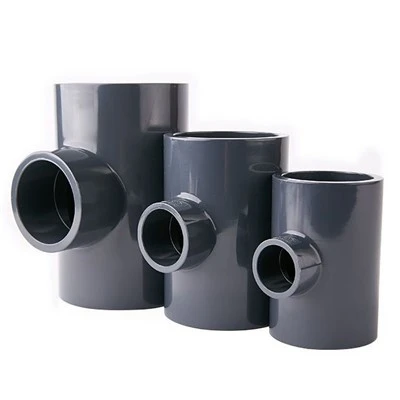
If you’re a plumber looking for a reliable, low-leakage material for your next job, a homeowner considering a repipe, or a municipal engineer designing a new water system, let’s talk. I can answer any questions you have about testing, installation, or product specifications, and help you find the right PP-R pipes and fittings for your project. Whether you need a small order for a single bathroom or bulk supply for a large development, we have the expertise and product range to meet your needs.
HDPE Pipes and Fittings References
- NSF/ANSI Standard 61: Drinking Water System Components – Health Effects, 2021
- EN 12201: Plastics Piping Systems for Water Supply, 2011
- WHO Guidelines for Drinking-Water Quality, 4th Edition, 2011
- University of Munich, Testing of Residual Processing Aids in PP-R Pipes for Potable Water, 2019
- American Society of Plumbing Engineers (ASPE), Material Selection for Potable Water Systems, 2020
Shanxi Kaisheng Plastic Co., Ltd.
Shanxi Kaisheng Plastic Co., Ltd. is one of the most professional pp-r pipes and fittings manufacturers and suppliers in China, featured by quality products and good price. Welcome to buy durable pp-r pipes and fittings made in China here and get quotation from our factory. We also accept customized orders.
Address: No.72, Area S, Gate 1, Haohai Wumart, Fendong Street, Xiaodian District, Taiyuan City, Shanxi Province
E-mail: sxkssj8@163.com
WebSite: https://www.sxksgys.com/
