Hey guys, if you’ve been around the metal or alloy space for any length of time, you’ve probably heard ferrosilicon thrown around—but until recently, I didn’t fully grasp how much it drives the industries I work with, or just how tight the global demand has gotten. I’m a ferrosilicon supplier, and over the past five years, I’ve fielded dozens of calls from steelmakers, casting plants, and even some solar panel manufacturers, all asking the same question: “Is ferrosilicon going to stay tight this year?” That question’s become the backbone of my business, so I figured I’d break down what’s actually driving global demand, the gaps I’m seeing, and what this means for anyone looking to lock in consistent supply. Ferrosilicon
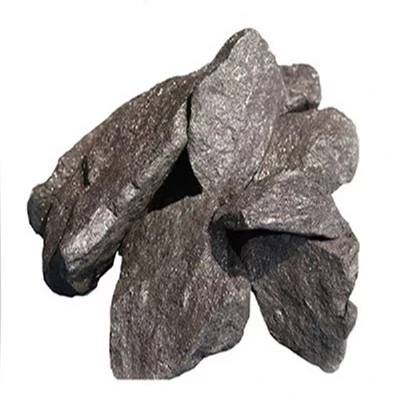
First off, let’s cut through the jargon for a sec. Ferrosilicon is basically an alloy of iron and silicon, usually 15% to 90% silicon by weight. It’s not a fancy product you see on store shelves, but it’s a workhorse for two huge sectors: steel production and metal casting. For steel, it’s the deoxidizer of choice—when you melt raw iron to make steel, there’s leftover oxygen that makes the metal brittle. Toss in a bit of ferrosilicon, and that oxygen binds with the silicon to form slag, which you can skim right off. It also adds strength to the final steel, which is why every steel mill from China to Brazil relies on it. Then there’s casting: when you make things like engine blocks, pipes, or kitchen appliances from cast iron, ferrosilicon controls the graphite structure so the casting doesn’t crack mid-production.
Now, the biggest driver of demand? Unsurprisingly, global steel output. For the past three years, steel production’s bounced back way faster than most analysts predicted post-pandemic. Let’s start with China—they’re still the world’s biggest steel producer, making around 55% of the global total. Even with their push to cut carbon emissions (more on that later), their steel mills cranked out 1 billion metric tons in 2023, and demand for ferrosilicon there stayed steady. Then there’s Southeast Asia: places like India, Vietnam, and Indonesia are building new steel mills left and right to support their booming infrastructure. India alone added 20 million tons of new steel production capacity between 2021 and 2024, and every single one of those mills needs ferrosilicon. In the U.S., steel output’s been on the upswing too, driven by the Inflation Reduction Act’s push for clean energy projects, like wind turbine towers and electric vehicle (EV) components—both of which require specialty steel that uses more ferrosilicon than standard construction steel.
Wait, but it’s not just steel. There’s a quieter, fast-growing demand stream for high-purity ferrosilicon (that’s the 75% to 90% silicon stuff) from the solar and semiconductor industries. Here’s the thing: polysilicon, the key material for solar panels, uses ferrosilicon as a starting raw material. Back in 2020, solar polysilicon production only used about 8% of global ferrosilicon supply. By 2024, that number’s jumped to 17%—and it’s only going up. The International Energy Agency (IEA) says we need to triple solar capacity by 2030 to hit net-zero goals, which means polysilicon production will have to grow 3x over the next six years. That’s a ton of extra demand my team and I are already planning for, because if we don’t have enough high-purity ferrosilicon, solar manufacturers can’t scale fast enough.
But demand’s only half the story. A lot of people don’t talk about the supply side constraints that make this demand even more impactful. Ferrosilicon production relies on electric arc furnaces that run on coal, so it’s energy-intensive—like, 12 megawatt-hours per ton, give or take. That means places with cheap, low-carbon or low-cost energy dominate production right now. China makes 70% of global ferrosilicon, but their recent push to cut industrial carbon emissions has forced a lot of small, outdated mills to shut down. In 2022 alone, China closed 30% of their ferrosilicon capacity, and they’re on track to close another 15% by 2026 to meet their climate targets. Then there’s Europe: their ferrosilicon production dropped 40% between 2020 and 2023 because of high natural gas prices, and most of those mills never came back. That left a supply gap that’s been tough to fill, because building a new ferrosilicon furnace takes 18 to 24 months and millions of dollars in capital.
I’ve seen this play out in my own business over the past two years. In 2022, when Europe cut their production, a lot of steel mills that used to buy local started scrambling for supply from places like South Africa, Russia, and Kazakhstan. But those regions have their own issues: South Africa’s had power outages that cut production by 20% in 2023, Russia’s exports are subject to global trade restrictions, and Kazakhstan’s got domestic demand for their own steel that’s eating up a chunk of their supply. That means even when demand’s growing, there’s less product to go around, which is why prices for ferrosilicon have risen 25% since 2021.
Wait, but is there any demand slowdown on the horizon? Some analysts are saying that a potential global recession could cut steel demand, and therefore ferrosilicon. But here’s what I’ve noticed as a supplier: steel demand doesn’t drop nearly as fast as people think, even in economic slumps. The last time we had a mild recession in 2020, steel output only dropped 3% in North America and Europe, and ferrosilicon demand actually held steady because mills use the alloy to repair existing infrastructure, not just build new stuff. Plus, the solar side of demand is still growing like a weed—even a mild recession isn’t going to slow down governments’ pushes for renewable energy. The IEA’s solar projections are based on policy goals, not just market cycles, so that 17% number I mentioned earlier will keep climbing, probably to 25% by 2028.
Another angle: specialty ferrosilicon products. It’s not just the standard 75% silicon grade that everyone buys anymore. We’re seeing a lot of demand for low-carbon ferrosilicon, which is made with renewable energy instead of coal. Big players like Tesla and Siemens are already reaching out to me for that, because they need to cut their supply chain carbon footprints to meet their own net-zero goals. Low-carbon ferrosilicon currently only makes up 5% of global supply, but that’s projected to hit 12% by 2027. That’s a whole new demand stream I didn’t expect three years ago, and it’s become a big part of my business’s growth.
Now, the gaps that my team and I are filling as a supplier. A lot of small and medium steel mills can’t lock in long-term contracts with big Chinese producers, because those producers prioritize their largest customers. I’ve built my model around working with mid-sized mills, casting plants, and solar manufacturers to give them consistent, on-time supply, even when global logistics are tight. For example, a few months back, a solar panel maker in Texas reached out because their usual supplier couldn’t get them high-purity ferrosilicon on time—we were able to ship a 500-ton order in six weeks, which cut their production delays by almost two months. That’s the stuff that keeps my phone ringing, honestly.
But I’ll be real with you: there are still risks here. If a big ferrosilicon producer like China has another round of mill shutdowns, or if natural gas prices in Europe spike again, supply could get even tighter. And with the solar demand growing so fast, there’s a risk that polysilicon producers will outbid steel mills for high-purity ferrosilicon, which could push steel prices up too. For anyone in the market for ferrosilicon right now, the advice I give is simple: don’t wait to lock in supply. A lot of customers I work with tried to hold out for better prices in 2022, and they ended up paying 15% more when they had to secure supply last minute.

At the end of the day, ferrosilicon is one of those “hidden in plain sight” materials that powers a huge chunk of the global economy. Without it, you can’t make the steel for a new highway, a wind turbine blade, or a car battery. As a supplier, I’ve watched demand grow steadily over the past few years, and I don’t see that slowing down anytime soon. If you’re in need of consistent ferrosilicon supply, whether it’s standard grades for steel or specialty high-purity stuff for solar, my team is here to help. Shoot us a message to connect and chat through your specific needs, no obligation—we can talk pricing, delivery timelines, and even low-carbon options if that’s what you’re after.
Silicon Metal References
- International Energy Agency. (2024). Solar PV Industry Update: Global Capacity and Supply Chain Projections.
- World Steel Association. (2023). Steel Industry Data: Global Production and Demand Trends.
- International Ferrous Allows Association. (2024). Ferrosilicon Supply and Demand Market Report.
- U.S. Energy Information Administration. (2023). Clean Energy Supply Chain Materials: Ferrosilicon for Polysilicon Production.
Jiaocheng County Zemei Metal Co., Ltd.
As one of the most professional ferrosilicon manufacturers and suppliers in China, we also support customized service with low price. Please feel free to wholesale bulk high quality ferrosilicon in stock here from our factory. Welcome to contact us for quotation.
Address: Jiaocheng Zemei Metal Co., Ltd., Shihou Village, Jiaocheng County, Lüliang City, Shanxi Province, China
E-mail: dorissunzm@gmail.com
WebSite: https://www.zmfesimg.com/
