Hey there, fellow gear heads, device tinkerers, and anyone looking to breathe new life into a high-voltage, high-energy device—let’s talk about one of the most common questions I get as a lithium battery supplier: How do you safely and correctly install a 60V 50Ah lithium battery into your custom build, e-bike, solar setup, or whatever project you’re working on? 60v 50ah Lithium Battery

I’ve been in this game for over a decade, sourcing cells, testing packs, and helping customers avoid the mistakes that turn a promising project into a fire hazard or a total flop. When I first started, I watched a buddy ruin a perfectly good e-scooter by slapping a random 60V battery into it without checking basic specs, and that’s the kind of avoidable error I want to help you skip today. A 60V 50Ah lithium battery isn’t just a big power pack—it’s a delicate, high-energy system that needs respect, and following the right steps will make sure it works for years, not just a few weeks.
First, let’s hit the pre-install prep because this is where 90% of people go wrong, especially if you’re replacing an old lead-acid battery or retrofitting a device that was built for a different power source. A lot of first-timers see “60V” and assume that’s all that matters, but 50Ah is just as critical, and there’s more to matching your new battery to your device than voltage alone.
Start with your device’s power requirements. Pull up the user manual or do a quick online search for your specific model—look for two key numbers: nominal voltage and maximum current draw. For example, if you’re putting a 60V 50Ah battery into a 60V e-bike motor that pulls 25A peak, you’re good to go, but if your device is only rated for 30V, this battery is way too powerful and will fry every component in minutes. Another big one: voltage matching isn’t just nominal—lead-acid batteries have a nominal voltage that’s lower than their actual full charge, but lithium is different. A fully charged 60V lithium pack will hit around 67.2V, and your device’s voltage regulator has to handle that peak. I’ve had customers reach out panicking because their new lithium battery showed 67V and they thought it was defective—nope, that’s normal, as long as it doesn’t dip below 54V when discharged.
Next, check dimensions and form factor. A 60V 50Ah battery is larger than your standard 12V car battery, but the exact size depends on how the cells are arranged. Some are built as slim pouch packs for e-bike frames, others are hard-case for solar setups. Measure the space in your device—don’t just guess. I once had a customer order three of our hard-case 60V 50Ah packs for a solar system build only to find they wouldn’t fit in the custom cabinet he’d built because he’d used an old lead-acid battery’s dimensions. Always leave a little extra space (about an inch on each side) for ventilation, too—lithium batteries generate heat, and trapping that heat is a fast track to reduced lifespan or failure.
Also, confirm your battery type. Not all lithium is the same. For most device installs, we recommend lithium iron phosphate (LiFePO4) for their safety, long cycle life (up to 2,000 cycles, compared to 500 for traditional lithium-ion), and tolerance for high discharge rates. That’s what we supply, by the way—we test every single 60V 50Ah pack for internal resistance, voltage consistency, and protection circuits before it leaves our warehouse, because bad protection circuits are the number one cause of lithium battery failures. Speaking of protection circuits, that’s non-negotiable. Every good 60V 50Ah lithium pack comes with a Battery Management System (BMS), and you shouldn’t install one without it. The BMS does three critical jobs: it prevents overcharging (which can cause swelling or fire), over-discharging (which kills cells prematurely), and short-circuiting. Don’t try to bypass or modify the BMS to make it fit your device—that’s a risk I will never advise, no matter how tempting it is.
Okay, you’ve done your pre-install checks, you’ve got the right battery, and you’ve laid out your tools. Now, let’s talk safety, because this isn’t a part you want to skip. I always wear safety glasses and heat-resistant gloves when working on any lithium install, and I keep a Class D fire extinguisher nearby—traditional water or A-B-C extinguishers don’t work on lithium fires. Also, work on a non-flammable surface, like a concrete workshop bench, not your wooden dining table or carpeted garage floor. Never work near open flames, and make sure your hands are dry—water and electricity don’t mix, especially with high-voltage systems. Before you do anything, disconnect your device from any power source, and if your old battery is still in there, disconnect it entirely.
Now, the installation steps themselves, and this is where the devil is in the details. First, orient the battery correctly. Most packs have a labeled positive (+) and negative (-) terminal, and your device will have matching terminals—some use bolts, some use quick-connect terminals. Never force a connector; if it doesn’t fit, double-check that you didn’t flip positive and negative. Reversing polarity will blow fuses, fry controllers, and possibly damage your battery’s BMS beyond repair. I’ve seen that mistake so many times, especially with retro builds where people mix up old wiring colors. If you’re not sure, test the voltage with a multimeter before connecting—set your multimeter to DC volts, touch the red probe to the positive terminal on your battery, and black to negative. If it reads around 54V (fully discharged) to 67.2V (fully charged), you’re on the right track.
Once you’ve confirmed polarity, it’s time to connect the terminals. Start with the negative terminal first? Wait, no—wait, let’s get this right: when connecting a new battery to a device, always connect the positive terminal first, then the negative. Why? If you accidentally touch the wrench or connector to a metal part of your device while connecting positive, the negative is not yet connected, so you won’t cause a short circuit. If you did negative first, touching the positive to metal would create a short immediately. That’s a small detail that saves a lot of headaches. Tighten the terminals securely, but don’t over-tighten—you can strip the threads on the battery terminals or the device’s connections, which will cause bad electrical contact and overheating. A good rule is to tighten until the connector is snug, then give it a quarter turn more.
After connecting the main power terminals, check for any other wiring that needs to be hooked up. Some 60V 50Ah packs have a small secondary connector for the BMS, which communicates with your device’s controller or a display. This is especially common on e-bikes or custom power tools—if your battery has this secondary port, make sure you connect it correctly, because it sends data about battery level, temperature, and health to your device. Skipping this step won’t necessarily damage anything, but you’ll lose access to battery monitoring, and that means you won’t know if your battery is overheating or running low until it’s too late.
Now, secure the battery in place. This is another step people skip, and it leads to problems. If your battery is bouncing around while you use your device—say, on a mountain bike or a work cart—the terminals can come loose, or the battery can be damaged from impact. Use non-conductive mounting brackets (plastic or rubber, not metal) to secure it, or velcro straps if it’s a removable pack. Don’t wrap metal tape around the battery or use metal clamps—you could accidentally bridge the positive and negative terminals and cause a short circuit.
Once everything is connected and secured, it’s time for the post-install test, and this is the most important step after connecting. Before you turn your device on, double-check all connections: positive and negative are tight, no loose wires, the BMS connector is in place, the battery is secured. Now, turn on your multimeter again and test the voltage across the device’s input terminals—if it’s reading close to the battery’s voltage, you’re ready to power on your device. Turn it on slowly, don’t floor the throttle or crank the solar inverter right away. Watch for any weird signs: buzzing from the controller, smoke, excessive heat coming from the battery or device, or error codes on a display. If anything feels off, turn it off immediately, disconnect the battery, and go back through your steps. I always do a 10-minute test run with no load on the device first, just to make sure everything is working, before putting it under full load.
Let’s talk about some common mistakes I’ve seen customers make, because even if you follow all the steps, it’s easy to slip up. First, overloading the battery. A 60V 50Ah battery can deliver a lot of power, but if your device’s peak current draw is higher than what the BMS is rated for, you’ll trigger a protection shutdown. For example, if you have a 60V 50Ah LiFePO4 pack with a 100A continuous discharge rating, that means you can safely draw 100A without issues, but if your motor pulls 150A peak, you’ll get regular shutdowns or even damage the pack. Always check the BMS’s continuous and peak discharge ratings, which we clearly list on every product page for our 60V 50Ah batteries, so you know exactly what it’s capable of.
Another mistake is not balancing the battery after installation. When you receive a new 60V 50Ah lithium pack, the cells are almost balanced, but it’s a good idea to do a full charge and discharge cycle before putting it into regular use. Run the battery all the way down (but not below 54V, which is the cut-off for most LiFePO4 packs) then charge it back up to full. This helps the BMS calibrate its state of charge reading, so your battery level display will be accurate, not jumping around.
And finally, maintenance. A 60V 50Ah lithium battery will last 5-8 years if you take care of it, but that means regular checks. Every few months, inspect the terminals for corrosion—if you see white buildup, disconnect the battery, clean the terminals with a mixture of baking soda and water, dry them completely, and reapply a thin layer of dielectric grease to prevent corrosion. Don’t leave your device with the battery installed if you’re storing it for more than a month—store the battery at a 50% charge level in a cool, dry place, not in direct sunlight or a freezing garage.
If you’re reading this and you’re not sure about any step—whether you’re retrofitting an old e-scooter, building a custom solar power cart, or upgrading a power tool—don’t guess. Our team works with hobbyists, small manufacturers, and everyone in between to make sure they get the right 60V 50Ah lithium battery for their device, and we’re here to answer questions, offer installation tips, or even provide custom pack configurations if your project has unique needs. We test every pack ourselves, so you can trust that when you order from us, you’re getting a battery that’s safe, reliable, and built to last.
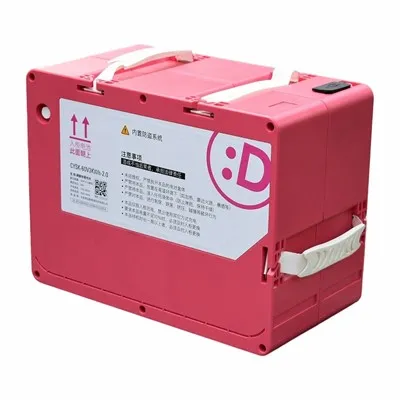
At the end of the day, installing a 60V 50Ah lithium battery isn’t rocket science, but it does require attention to detail and safety. Skip the shortcuts, do your prep work, and don’t hesitate to reach out if you run into any issues. When done right, this battery will give you the power you need, whenever you need it, for years to come. So if you’re ready to get started on your project, connect with our team to discuss your requirements, and we’ll help you get the right battery for your device.
Integrated Open Rear Axle-single Gear References:
- lithium Battery University. Installation Best Practices for High-Voltage Lithium Packs.
- National Fire Protection Association. Guidelines for Lithium Battery Safety in Portable Equipment.
- International Standard IEC 62660-1. Secondary Lithium-Ion Cells for Propulsion of Electric Vehicles – Part 1: Performance and Life Testing.
- Automotive Industrial Electronics Association. Retrofit Guidelines for Lithium Battery Replacement in Legacy Devices.
Jiangsu Changyun Drive Techniques Co., Ltd.
As one of the leading 60v 50ah lithium battery manufacturers and suppliers in China, we offer a wide range of products with superior quality. Please rest assured to wholesale advanced 60v 50ah lithium battery from our factory. If you have any enquiry about cooperation, please feel free to email us.
Address: Building B, 1st Floor, Chuangyan Port, Science and Education City, Wujin District, Changzhou City, Jiangsu Province
E-mail: eva@czbenma.com
WebSite: https://www.cyevenergy.com/
