Hey there! I’m a supplier of Coordinate Measuring Machines (CMMs), and I often get asked, "Can a Coordinate Measuring Machine measure complex shapes?" Well, let me tell you, the answer is a resounding yes! In this blog, I’ll break down how CMMs tackle complex shapes, why they’re so great for this task, and how they can benefit your business. Coordinate Measuring Machine
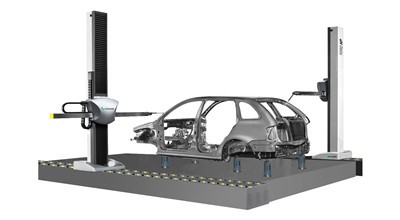
First off, let’s talk about what a CMM is. A Coordinate Measuring Machine is a precision device used to measure the physical geometric characteristics of an object. It works by using a probe to touch points on the surface of the object and then records the X, Y, and Z coordinates of those points. These coordinates are then used to create a 3D model of the object, which can be analyzed to determine its dimensions, shape, and other geometric properties.
Now, when it comes to measuring complex shapes, CMMs are in a league of their own. Complex shapes can include anything from freeform surfaces, like those found on automotive parts or aerospace components, to intricate geometries with multiple curves and angles. These shapes are often difficult to measure using traditional measurement tools, but CMMs can handle them with ease.
One of the key advantages of using a CMM to measure complex shapes is its high level of accuracy. CMMs can measure to extremely tight tolerances, often within a few microns. This level of precision is crucial when dealing with complex shapes, as even the slightest deviation can affect the functionality of the part. For example, in the aerospace industry, a small error in the measurement of a turbine blade can lead to reduced performance or even catastrophic failure.
Another advantage of CMMs is their flexibility. They can be programmed to measure a wide variety of shapes and sizes, making them suitable for a range of applications. Whether you’re measuring a small, intricate part or a large, complex component, a CMM can be customized to meet your specific needs. This flexibility also allows for quick and easy changes to the measurement program, which is especially useful when dealing with prototypes or small production runs.
In addition to accuracy and flexibility, CMMs also offer a high level of repeatability. This means that the same measurement can be taken multiple times with the same results, ensuring consistency and reliability. This is particularly important in industries where quality control is critical, such as the medical and automotive sectors.
So, how does a CMM actually measure complex shapes? Well, it all starts with the probe. The probe is the part of the CMM that makes contact with the surface of the object being measured. There are several different types of probes available, each with its own advantages and disadvantages. For example, a touch-trigger probe is a simple and cost-effective option that works by making contact with the surface of the object and then sending a signal to the CMM’s controller. This type of probe is suitable for measuring simple shapes and surfaces.
On the other hand, a scanning probe is a more advanced option that can measure the surface of an object in a continuous motion. This type of probe is ideal for measuring complex shapes and freeform surfaces, as it can capture a large number of data points in a short amount of time. Scanning probes can also be used to create a 3D model of the object, which can be used for further analysis and inspection.
Once the probe has collected the data, it is sent to the CMM’s controller, which processes the data and creates a 3D model of the object. This model can then be analyzed using specialized software to determine the dimensions, shape, and other geometric properties of the object. The software can also be used to compare the measured object to a CAD model, which can help to identify any deviations or errors.
Now, let’s talk about some of the industries that can benefit from using CMMs to measure complex shapes. One of the biggest users of CMMs is the automotive industry. In the automotive industry, CMMs are used to measure everything from engine components to body panels. The high level of accuracy and repeatability offered by CMMs is essential for ensuring the quality and performance of automotive parts.
Another industry that can benefit from using CMMs is the aerospace industry. In the aerospace industry, CMMs are used to measure critical components such as turbine blades, engine casings, and wing structures. The high level of precision offered by CMMs is crucial for ensuring the safety and reliability of aerospace components.
The medical industry is also a major user of CMMs. In the medical industry, CMMs are used to measure everything from surgical instruments to prosthetics. The high level of accuracy and repeatability offered by CMMs is essential for ensuring the quality and performance of medical devices.
So, if you’re in an industry that requires the measurement of complex shapes, a CMM could be the solution you’re looking for. Not only can a CMM help you to ensure the quality and performance of your products, but it can also save you time and money by reducing the need for manual measurement and inspection.
If you’re interested in learning more about how a CMM can benefit your business, or if you have any questions about our products, please don’t hesitate to get in touch. We’d be happy to discuss your specific needs and provide you with a customized solution.
Vertical Machining Centers References
- "Coordinate Measuring Machines: Principles and Applications" by John A. Black
- "Metrology for Quality Control" by Michael A. Hocken
Hermens Industrial Co., Ltd.
As one of the most professional coordinate measuring machine enterprises in China, we’re featured by quality products and low price. Please rest assured to buy cheap coordinate measuring machine in stock here and get quotation from our factory. We also accept customized orders.
Address: 9/59 Moo 14, Rachathewa , Bang Phli , Samut Prakan Province 10540
E-mail: liu_jincheng@hzhemen.com
WebSite: https://www.hermensindustrial.com/
