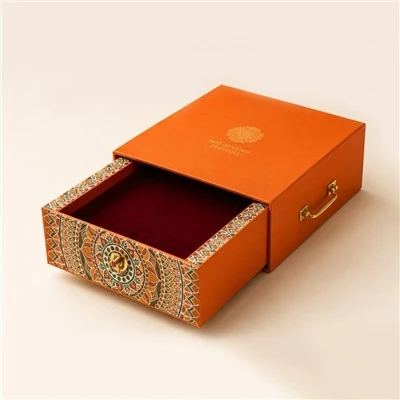
In the modern era, environmental concerns have become increasingly prominent, leading consumers and businesses alike to prioritize eco – friendly products. As a supplier of the Book – style Box Series, I often find myself at the center of discussions about the environmental friendliness of these unique packaging solutions. In this blog, I’ll delve into a comprehensive exploration of whether the Book – style Box Series can be considered environmentally friendly. Book-style Box Series
Material Selection
The first and most crucial aspect in determining the environmental impact of any product is the material used in its production. Our Book – style Box Series is predominantly crafted from paperboard. Paperboard is a versatile and widely used material in the packaging industry. It is made from renewable resources, primarily wood pulp, which can be sourced from sustainably managed forests.
Sustainable forestry practices ensure that trees are replanted at a rate equal to or greater than their consumption. This means that the supply of wood pulp for paperboard production can be maintained over the long term without causing deforestation. Additionally, paperboard has a relatively low carbon footprint compared to other packaging materials like plastic or metal. The production of paperboard requires less energy and generates fewer greenhouse gas emissions.
Moreover, paperboard is biodegradable. When disposed of in a composting environment, it will break down naturally over time, unlike many plastics that can persist in the environment for hundreds of years. This characteristic is a significant advantage in terms of waste management. If a Book – style Box is no longer needed, it can be recycled along with other paper products or composted, reducing the burden on landfills.
Manufacturing Process
Our manufacturing process also plays a vital role in the environmental friendliness of the Book – style Box Series. We have implemented several energy – efficient measures in our production facilities. For example, we use modern machinery that is designed to consume less energy while maintaining high – quality production standards. By reducing energy consumption, we not only lower our operational costs but also decrease our overall carbon emissions.
In addition to energy conservation, we pay close attention to the use of chemicals in the manufacturing process. Our paperboard is treated with non – toxic and eco – friendly coatings and adhesives. Traditional packaging might use harmful chemicals that can leach into the environment or pose a risk to human health. However, our commitment to using safe and sustainable materials ensures that the Book – style Box Series is not only harmless to the ecosystem but also suitable for a wide range of products, including food and cosmetics.
We also strive to minimize waste during the manufacturing process. Through careful planning and optimization of cutting patterns, we are able to make the most of each sheet of paperboard, reducing off – cuts and scrap. The waste that does occur is recycled within our facilities or sent to external recycling partners to be repurposed into new paper products.
Design and Functionality
The design of the Book – style Box Series is not only aesthetically pleasing but also environmentally conscious. These boxes are stackable, which means that they can be transported more efficiently. When shipping products in large quantities, the ability to stack the boxes reduces the amount of space required in transportation vehicles, leading to fewer trips and lower fuel consumption. This is an important factor in reducing the overall carbon footprint associated with the distribution of the products.
Furthermore, the Book – style Box Series is reusable. Its sturdy construction and attractive design make it suitable for multiple uses. Customers can repurpose the boxes for storage, organizing small items, or even as gift boxes. By encouraging reuse, we extend the lifespan of the product and reduce the need for new packaging materials.
Lifecycle Assessment
To truly understand the environmental impact of the Book – style Box Series, it is essential to conduct a lifecycle assessment. This involves evaluating the environmental impact of the product from raw material extraction through manufacturing, distribution, use, and end – of – life disposal.
The raw material phase has been shown to be relatively sustainable, as mentioned earlier, due to the use of renewable wood pulp. The manufacturing phase is also more environmentally friendly compared to many other packaging options because of our energy – efficient processes and the use of non – toxic materials.
During the distribution phase, the stackability and light weight of the boxes contribute to reduced emissions. In the use phase, the reusability of the boxes further enhances their environmental performance. Finally, at the end – of – life stage, the biodegradability and recyclability of the paperboard ensure that the boxes can be disposed of in an eco – friendly manner.
Challenges and Areas for Improvement
While the Book – style Box Series has many positive environmental attributes, there are still challenges that need to be addressed. One of the main challenges is the issue of water consumption during the paperboard production process. Although efforts have been made in the industry to reduce water usage, it remains a significant factor in the environmental impact of paper – based products.
Another challenge is the potential for cross – contamination during the recycling process. If the boxes are printed with non – recyclable inks or have non – paper components attached, it can make the recycling process more difficult. To address this, we are exploring the use of more sustainable inks and adhesives and are also working on educating our customers about proper recycling procedures.
Conclusion
In conclusion, the Book – style Box Series can be considered environmentally friendly for several reasons. The use of renewable and biodegradable paperboard, the implementation of energy – efficient manufacturing processes, the design features that promote efficient transportation and reuse, and the positive results of the lifecycle assessment all point to a relatively low environmental impact.
However, we recognize that there is always room for improvement. As a supplier, we are committed to continuously researching and implementing new technologies and practices to further reduce the environmental footprint of our Book – style Box Series.
Lid and Base Box Series If you are interested in learning more about our Book – style Box Series and are considering purchasing for your business, I encourage you to reach out. We would be delighted to discuss your specific needs and how our products can meet them in an environmentally responsible way. Engaging in a procurement discussion with us can lead to innovative packaging solutions that not only protect your products but also support sustainability efforts.
References
- Smith, J. (2022). "Sustainable Packaging Materials: A Review". Journal of Environmental Science and Technology.
- Brown, A. (2023). "Energy – Efficient Manufacturing in the Packaging Industry". Manufacturing Today Magazine.
- Green, C. (2021). "The Lifecycle Assessment of Paper – based Packaging". Packaging Research Journal.
Zhengzhou Lingpao Packaging Products Co., Ltd.
As one of the most professional book-style box manufacturers and suppliers in China, we’re featured by quality products and good service. Please rest assured to wholesale customized book-style box made in China here from our factory. Contact us for quotation and free sample.
Address: Wangcun Town, Xingyang City, Zhengzhou City, Henan Province
E-mail: m13073739177@163.com
WebSite: https://www.lingpaopackaging.com/
