Can the Building Materials Flammability Tester test building materials with different porosity levels?
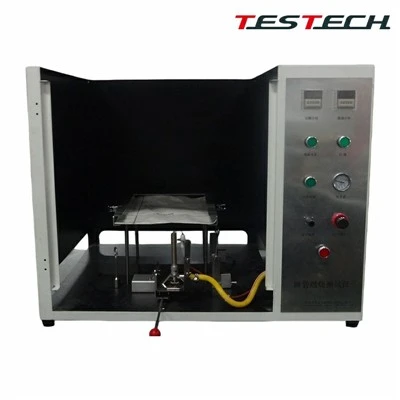
As a supplier of building materials flammability testers, it’s a question I often encounter: Can our testers accurately evaluate the flammability of building materials with different porosity levels? In this blog, I’ll delve into the intricacies of this topic, exploring how our testers handle materials ranging from low – porosity dense stones to high – porosity insulating foams. Building Materials Flammability Tester
Understanding the Concept of Porosity in Building Materials
Porosity refers to the ratio of the volume of voids or pores in a material to its total volume. Building materials can have a wide range of porosity levels. For example, solid bricks typically have a relatively low porosity, with a dense structure that allows for minimal air circulation within. On the other hand, materials like aerated concrete or some types of insulation boards have high porosity, with a large number of interconnected pores.
The porosity of building materials can significantly impact their flammability. High – porosity materials often have larger surface areas due to the presence of pores. This increased surface area provides more contact points between the material and oxygen, which can potentially enhance the combustion process. Additionally, the pores in a material can act as channels for the movement of oxygen and combustible gases, effectively influencing how quickly a fire can spread and how intensely a material burns.
How Building Materials Flammability Testers Work
Our building materials flammability testers are designed to simulate real – world fire conditions as closely as possible. They operate based on a set of standardized testing procedures, which can include exposing the material to a controlled heat source, measuring the ignition time, flame spread rate, heat release rate, and other related parameters.
The testing chamber of our equipment is carefully calibrated to ensure consistent environmental conditions. A sample of the building material is placed inside the chamber, and a heat flux is applied to the surface of the sample. Sensors are used to monitor various aspects of the test, such as the temperature at different points on the sample, the amount of heat released, and the growth of the flame.
Testing Low – Porosity Building Materials
When it comes to low – porosity building materials, our testers perform exceptionally well. These materials, such as granite or steel, have a relatively compact structure. The low porosity means that there are fewer internal channels for oxygen and combustible gases to move through. As a result, they generally have lower flammability compared to high – porosity materials.
Our testers can accurately measure the ignition resistance of low – porosity materials. Since these materials have a lower surface area exposed to the heat source, they require more energy to reach the ignition point. The sensors in our testers can detect the exact moment when the material begins to show signs of ignition, even for materials with high ignition thresholds.
In terms of flame spread, low – porosity materials typically have a slower flame spread rate. Our testers can precisely measure this rate by tracking the movement of the flame across the surface of the sample. The data collected from these tests can help architects and engineers determine the suitability of low – porosity materials for fire – prone areas.
Challenges and Solutions in Testing High – Porosity Building Materials
Testing high – porosity building materials presents some unique challenges. The large number of pores in these materials can cause the flame to spread more rapidly due to the increased oxygen supply and the movement of combustible gases through the pores. This can lead to a more complex combustion process, which is harder to measure accurately.
One of the challenges is the accurate measurement of the heat release rate. High – porosity materials can release heat at a faster rate because of the increased surface area and the efficient transport of combustible substances. Our testers are equipped with advanced heat flux sensors that can capture the rapid changes in heat release. These sensors are highly sensitive and can provide real – time data on the heat output of the material during the combustion process.
Another challenge is the assessment of flame spread. The interconnected pores in high – porosity materials can cause the flame to spread in a non – uniform manner. To overcome this, our testers use multiple cameras and optical sensors to track the flame from different angles. This multi – sensor approach allows us to capture a comprehensive view of the flame spread and accurately measure the rate and pattern of spread.
The Importance of Testing Building Materials with Different Porosity Levels
Accurate testing of building materials with different porosity levels is crucial for ensuring the safety of buildings. Building codes and regulations often require that materials used in construction meet certain flammability standards. By using our building materials flammability testers, architects, contractors, and building owners can have confidence that the materials they are using will perform well in the event of a fire.
For example, in high – rise buildings, the use of low – flammability materials is essential to prevent the rapid spread of fire. Testing materials with different porosity levels helps in selecting the most appropriate materials for different parts of the building. High – porosity insulation materials may be used in areas where thermal efficiency is a priority, but only if they meet the required flammability standards.
Conclusion

In conclusion, our building materials flammability testers are fully capable of testing building materials with different porosity levels. Whether it’s a low – porosity dense material or a high – porosity insulating foam, our testers can provide accurate and reliable data on flammability. We understand the unique challenges presented by materials with different porosity characteristics and have designed our equipment to overcome these challenges.
Building Materials Flammability Tester If you are involved in the construction industry and are in need of a reliable building materials flammability tester, we invite you to contact us for a closer discussion. Our team of experts is on standby to answer your questions and help you find the most suitable testing solution for your needs.
References
- ASTM International. Standard test methods for determining the flammability characteristics of building materials.
- ISO. International standards for fire safety testing of construction products.
- National Fire Protection Association (NFPA). Codes and standards related to building materials flammability.
TESTech Instrument (Suzhou) Technologies
TESTech Instrument (Suzhou) Technologies is one of the most reliable building materials flammability tester manufacturers and suppliers in China. If you’re going to wholesale durable building materials flammability tester, welcome to get quotation from our factory. For price consultation, contact us.
Address: 8/F, R&D and Production Workshop No. 5, Jiangsu Guoqian Technology Innovation Industrial Park, 168 Lüliangshan Road, Huqiu District, Suzhou, Jiangsu Province, China
E-mail: sales@testech.com.cn
WebSite: https://www.testechfiretest.com/
