Hey there, if you’re in the market for POC radios, I know one of the first questions you’re probably asking is, “What’s the actual price range here?” As a POC radio supplier who’s been in this game for a handful of years, I’ve heard that question more times than I can count—from small construction crews just testing out a new comms system to big event companies that need hundreds of units for festivals. Let me break this down like I would to a friend, no sales fluff, just the real deal. POC Radio
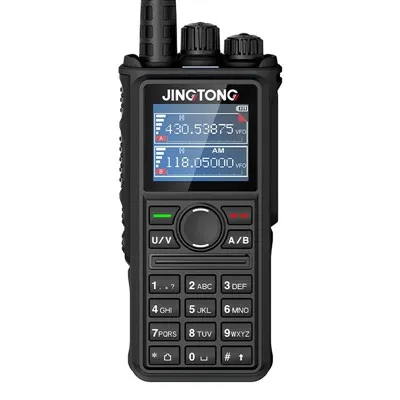
First, let’s get one thing straight: POC radios aren’t your old-school walkie-talkies that only work a couple miles max. They use cellular data (4G, 5G, even some satellite for remote areas), so their price depends on a ton of stuff—what features they have, how many units you’re buying, if you need add-ons like accessories or custom apps, and even what network you’re using. I’ve seen people get confused because some sites list super cheap units, while others are way pricier. That’s not a rip-off, that’s just different tiers for different needs.
Let’s start with the low end—budget units. These are usually for folks who don’t need fancy extras, just basic push-to-talk communication, maybe a couple of groups to chat with, and solid battery life for a 10-hour workday. For these, you’re looking at $80 to $150 per unit. Wait, hold on—before you think, “That’s way more than a regular walkie-talkie,” remember: these use cellular, so they can talk to any other POC radio anywhere in the country, no matter if you’re at a job site 10 miles out of town or across the state. Last year, a small landscaping company bought 12 of these for their crew, and they told me it saved them so much time not having to drive around checking on workers. The only catch with budget units is they don’t do things like GPS tracking, water resistance above IP54, or group broadcast alerts—stuff that’s non-negotiable for bigger teams.
Next up is the mid-range, which is the sweet spot for most businesses I work with—construction teams, event planners, small warehouse operations. These units start around $150 and go up to $350 each. What do you get for that extra cash? Let’s see: IP67 water and dust resistance (so if you’re out in the rain or dust at a job site, no problem), built-in GPS so you can track your crew’s location in real time (super helpful if someone’s working alone and needs help), programmable buttons for quick access to your most-used groups, and longer battery life—like 12 to 14 hours with heavy use. A local event company I supply bought 50 mid-range units last summer for a music festival, and they loved that they could send a broadcast alert to all staff when a VIP needed assistance, plus track where security was stationed all weekend. Another thing: mid-range units usually work on multiple cellular networks, so if your main carrier has a dead spot at a venue, you can switch without buying new radios.
Now, the high-end stuff—these are for large corporations, government agencies, or teams that work in super remote areas where cellular might be spotty. These units start at $350 and can go all the way up to $1,000 or more per unit. What makes them worth it? Satellite connectivity (so you can use them in the mountains, oil fields, or even the middle of the ocean), rugged builds that can survive drops from 6 feet or more, advanced encryption for confidential communications, and integrations with custom software your business might use—like inventory systems for warehouses or dispatch software for delivery fleets. Last year, a construction company that works on remote pipeline projects bought 20 high-end units because their job sites had almost no 4G coverage. Those radios let them talk to each other and send location updates even 50 miles away from the nearest cell tower. Also, if you need accessories like extra long-lasting batteries, heavy-duty holsters, or push-to-talk microphones for hard hats, those add-ons will bump up the price a bit—usually $20 to $100 per accessory, depending on what you need.
Wait, I should also talk about bulk pricing because that’s a big one. If you’re buying 10 units, you might pay $120 each for a budget model, but if you buy 50, that can drop to $75 each. For mid-range, 50 units might be $250 each instead of $300, and 100+ units can get you even better deals. A lot of suppliers (including me) offer volume discounts because we want to keep your business when you scale up—like if you’re a small team now and plan to hire more people next year. I always tell customers to be upfront about how many units they think they’ll need, because haggling (in a good way) is totally normal here. No one wants to overpay, and we don’t want to undercharge if you need more features.
Also, don’t forget about service plans. A lot of people ask me, “Do I have to pay monthly for POC radio service?” And yeah, most of them do—except for a few budget units that use your existing phone data, but those are pretty limited in how many groups you can have. Service plans usually cost $5 to $20 per unit per month, depending on how much data you use and what features you get. For example, a basic plan with 1GB of data is around $5, while a plan with unlimited data and satellite access is closer to $20. That’s an ongoing cost, but it’s way cheaper than old analog two-way radios that required you to rent a frequency from the government, which could run $100+ a month per unit. I usually explain that the service plan is separate from the radio price, so that’s another thing to factor into your budget.
Let me also clear up a common misconception: “Cheaper is better” isn’t always true here. A customer came to me last year who bought 20 super cheap POC radios from an online marketplace. They worked fine at first, but after a month, the battery life dropped to 2 hours, and the GPS kept glitching. When they contacted the seller, no one answered, so they wasted their money. The mid-range units I sell have a 2-year warranty, and I offer free tech support if you run into issues. That’s worth the extra $50 or $100 per unit, right? For small teams, though, the budget units can work great if you do your research and buy from a reputable supplier.
Another thing to consider is use case. If you’re using POC radios for a small office team that only needs to chat between 5 people, you don’t need a $1,000 high-end unit. A $100 budget unit would work perfect. If you’re running a retail store with 20 staff, a $200 mid-range unit with GPS would help you keep track of employees during busy times, like Black Friday. If you’re a forestry crew working 100 miles from the nearest town, you need that high-end satellite unit. It all lines up with what you actually need to do, not just what’s the most expensive.
So to wrap up the price range: budget (basic, small teams) = $80–$150/unit; mid-range (most businesses, medium teams) = $150–$350/unit; high-end (large/remote teams, specialized needs) = $350–$1,000+/unit. With volume discounts pulling those numbers down a good bit for bigger orders. Plus, the monthly service plan is something to budget for, usually $5–$20/unit/month.

If you’re still not sure which one fits your needs, just reach out. We can talk through your team size, where you’ll be using the radios, and what features matter most to you. I’ll give you a transparent quote no matter how many units you’re looking at. Don’t waste time guessing—let’s chat and find the right POC radio setup for your business.
3 Watt Walkie Talkie References:
- "POC Radio Market Report 2024: Global Trends and Pricing Analysis" – Comms Industry Review
- "Guide to POC Radio Features and Cost Breakdown" – Two-Way Communications Journal
- "Bulk Purchasing Strategies for POC Radios" – Small Business Tech Guide
Jingtong (Quanzhou) Electronics Co., Ltd.
We are one of the most professional poc radio manufacturers and suppliers in China, specialized in providing high quality customized service. We warmly welcome you to buy durable poc radio made in China here from our factory. For price consultation, contact us.
Address: No.288, Si Huang Industry Zone, Xia Mei Town, Nan An, Quanzhou, Fujian province, China 362302
E-mail: jtdjj@jtdjj.com
WebSite: https://www.jteradio.com/
